

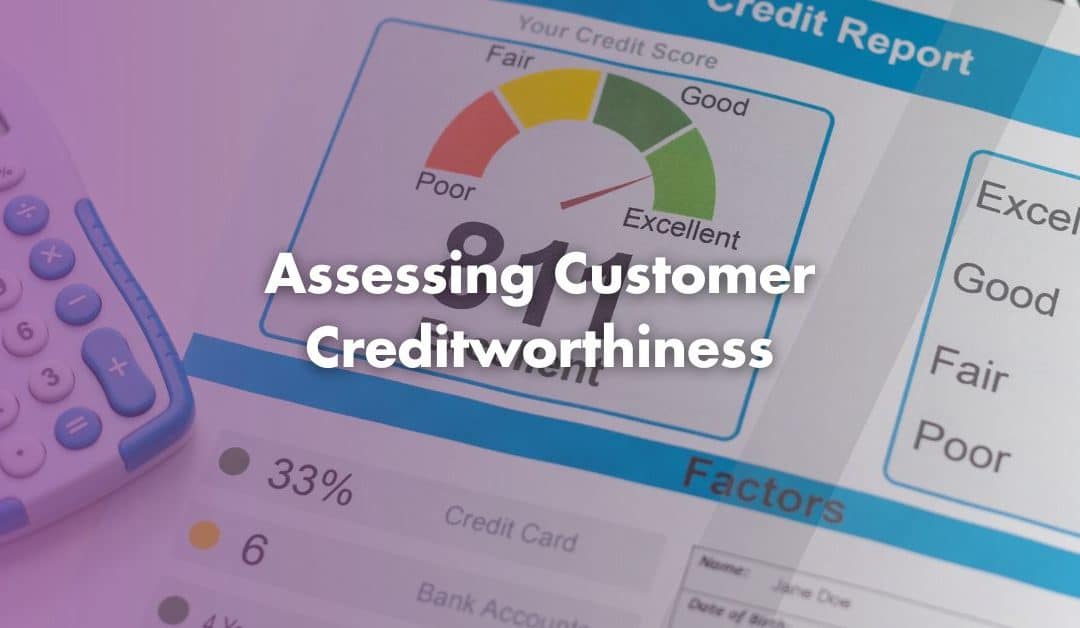
Extending credit to customers can help grow your business. It encourages trade and builds strong relationships. However, it also carries the risk of late or non-payment. To protect your business, you should be assessing customer creditworthiness.
What is Creditworthiness?
Creditworthiness is a measure of a customer’s ability to repay borrowed money. It is based on financial health, credit history and industry trends. By checking creditworthiness, businesses can reduce the risk of bad debt and maintain steady cash flow.
The 5 Cs of Creditworthiness
1. Character
Character refers to a customer’s financial reputation. Checking credit history, payment patterns and past bankruptcies helps determine reliability. Businesses that consistently meet payment deadlines are more trustworthy.
2. Capacity
Capacity measures a customer’s ability to make repayments. Reviewing Cash Flow Statements and outstanding debts can provide insight into whether a customer can meet future obligations.
3. Capital
Capital represents a business’s financial strength. Checking a customer’s assets and investments helps determine their ability to cover debts.
4. Collateral
Collateral includes assets that can be used to secure debt. Businesses with valuable assets can provide security if they fail to meet payment obligations.
5. Conditions
Economic, political and industry conditions can impact a business’s ability to repay debts. Businesses in unstable sectors or regions may carry higher credit risks.
Why You Should Be Assessing Customer Creditworthiness
Businesses rely on cash flow to operate smoothly. Offering credit without proper checks can lead to financial instability. According to a survey by QuickBooks, 60% of small business owners face cash flow issues.
Assessing customer creditworthiness before extending credit helps prevent payment delays and losses.
What to Do if a Customer is a Credit Risk
Before extending credit, you should establish clear credit policies and collection strategies. Defining risk levels helps businesses determine suitable credit limits for each customer.
If concerns arise after credit is granted, you should closely monitor the customer’s payment patterns. Additionally, frequent reminders and follow-ups can encourage timely payments.
If an invoice is overdue, you should act quickly to recover unpaid debts. Strategies include simplifying payment processes, using automated invoicing systems and setting transparent credit policies.
Ready to Take Control of Your Cash Flow?
Our expert team is here to help you recover debts efficiently and improve your cash flow. Contact us today to speak with a specialist and discover how our tailored credit management solutions can support your business.
Call us on 01452 69 89 89, Email us at enquires@pi-credit.co.uk or fill out our quick Contact Form and we’ll be in touch shortly. Follow us on Facebook for more!